
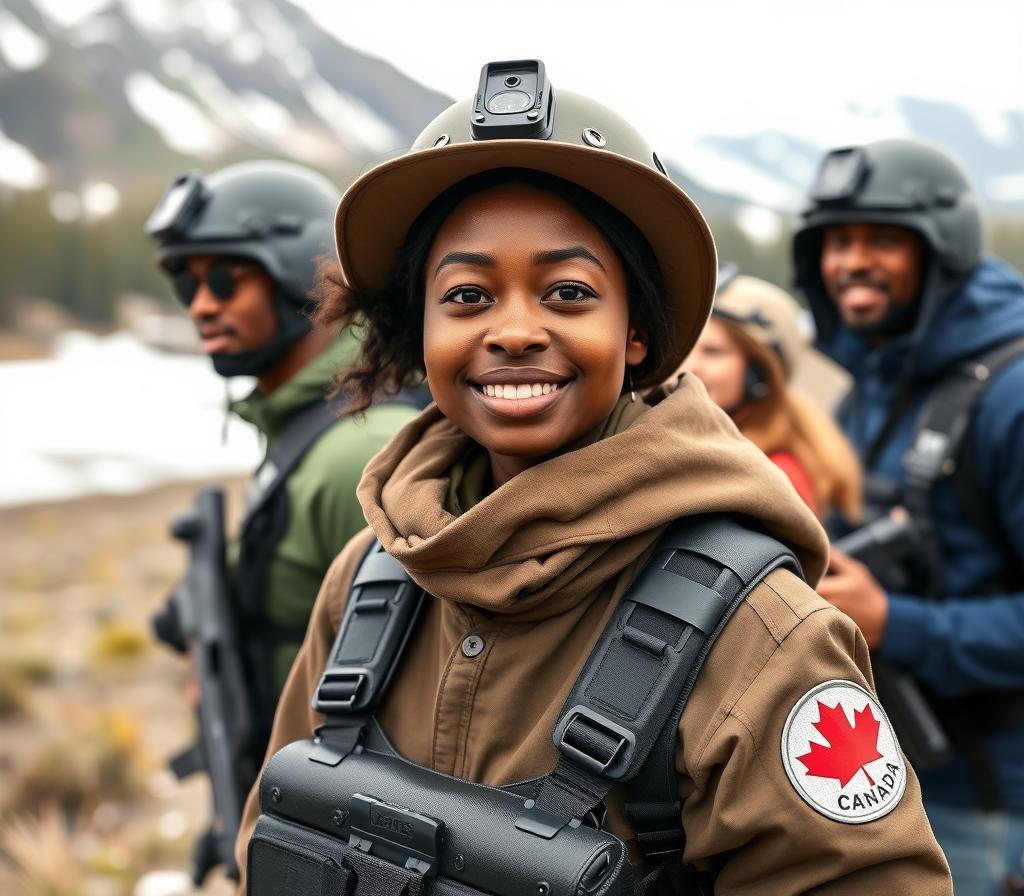
How To Apply And Work In Canada’S Security Sector In Under 6 Months: Police, Military & Defence Jobs For Foreign Nationals.
Are you a foreign-trained Security Sector Professional?
Get a Well-Paying Job and Work in Canada’s Security Sector in Under 6 Months:
Police, Military & Defence Jobs for Foreign Nationals
Canada’s security sector offers rare, fast-tracked pathways for foreign nationals — but not all routes move at the same speed. If you have 10 or more years of continuous military service overseas, the Canadian Armed Forces (CAF) can recruit you directly and have you working in under six months through a dedicated skilled immigration stream. For everyone else, police, corrections, border services, and civilian defence roles remain accessible — but require permanent residency first, extending the timeline to two to four years. This guide breaks down every pathway, who qualifies, and exactly how long each takes, so you can choose the right route from day one.
As an International Recruiter with over 25 years of experience, I have helped countless security experts and military veterans from around the globe find their way to Canada. The Canadian security sector is looking for dedicated, skilled individuals like you. Let’s explore the steps you need to take to join this prestigious field.
Three Pathways to Canada’s Security Sector
Pathway 1: Canadian Armed Forces — The Fast Track (3 to 6 Months)
Who Qualifies
This pathway is exclusively for foreign military professionals with:
- Minimum 10 years of continuous service in a recognized foreign military
- A full-time job offer from the CAF for at least 3 years
- A minimum 2-year post-secondary credential (with Educational Credential Assessment if obtained outside Canada)
- Official military service records and proof of CAF recruitment
- Eligibility under Express Entry (Canadian Experience Class, Federal Skilled Worker Program, or Federal Skilled Trades Program)
The 2026 Express Entry Update
In February 2026, Immigration, Refugees and Citizenship Canada (IRCC) launched a new Express Entry category specifically for Skilled Military Recruits. This allows the CAF to fast-track permanent residence for foreign military professionals with a valid job offer, cutting processing time to as little as 3 to 6 months. You must be recruited by the CAF first; this is not an open application pool.
How to Apply
- Contact CAF recruitment for foreign skilled military applicants
- Submit official service records and credentials
- Receive a formal CAF job offer
- Apply for permanent residence under the new Express Entry category
- Complete medical, security, and fitness assessments
- Deploy to Canada
Family: Your spouse and dependent children can accompany you. The CAF supports relocation and provides housing assistance in many cases.
Pathway 2: Public Safety Roles — Police, Corrections & Border Services (2 to 4 Years)
These roles do not hire directly from overseas. You must first become a permanent resident of Canada.
Police Services
- RCMP: Requires Canadian citizenship or permanent residency plus 3 years of residency in Canada (1,095 days as a PR)
- Municipal Police (Toronto, Calgary, Vancouver, etc.): Similar requirements — PR status plus residency periods vary by force
- Alberta PNP Shortcut: A job offer from an Alberta Association of Chiefs of Police member can lead to a Provincial Nominee Program nomination, accelerating your PR. However, you still cannot be sworn in as an officer until you meet residency requirements
Correctional Officers
- Correctional Service Canada (federal) and provincial correctional services hire correctional officers
- Requires Canadian citizenship or permanent residency
- No direct overseas recruitment; PR first, then apply through standard CSC recruitment
Border Services Officers (CBSA)The
- Canada Border Services Agency requires Canadian citizenship for most officer roles
- Some administrative roles may accept PR, but frontline enforcement requires citizenship
Parole Officers, Transit Police, Sheriffs & Court Officers
- All require permanent residency or citizenship
- Provincial variations apply; no direct overseas recruitment
Pathway 3: Private Security & Defence Contractors (6 to 24 Months)
Not a military veteran? Canada’s private security sector offers alternative pathways.
Security Guards & Loss Prevention
- Private firms (GardaWorld, Securitas, Paladin) can hire foreign workers on LMIA-based work permits
- Provincial security guard licensing required
- No PR required initially, but employer sponsorship is essential
Private Investigators & Armed Security
- Licensed agencies may sponsor foreign workers with relevant experience
- Cash-in-transit roles (Brinks, GardaWorld) require provincial licensing and clean criminal record
Cybersecurity & Defence Contractors
- Growing sector with demand for cybersecurity analysts, network defence specialists, and IT security consultants
- Defence contractors may hire on work permits, but federal cybersecurity roles requiring security clearance typically demand citizenship
Firefighters (Airport & Industrial)
- Municipal firefighters require PR or citizenship
- Private industrial and airport firefighters may be hired on LMIA-based work permits
Why Join the Canadian Security Sector?
The Canadian security sector offers unique opportunities that are hard to find elsewhere. Here is a comparison of the benefits you can expect:
| If You Have… | Best Pathway | Timeline |
|---|---|---|
| 10+ years foreign military service | CAF Skilled Military Recruit (Express Entry fast-track) | 3–6 months |
| 5+ years security/police experience (no military) | Private Security → PR via CEC/PNP → Police/Corrections later | 2–4 years |
| IT/cybersecurity background | Defence Contractor roles → PR pathway | 6–24 months |
| No security background, willing to train | Security Guard (work permit) → upskill → specialized roles | 6–12 months to first job |
| Feature | Traditional Security Jobs | Canada Security Sector (Police/Military/Defence) |
|---|---|---|
| Pay | Low to Medium ($20-$30/hr) | High ($35-$60/hr + benefits) |
| Job Stability | Often Temporary | Permanent (Government Role) |
| Career Growth | Limited | Significant (Ranks & Specializations) |
| Immigration Path | Difficult | Fast-Track (Permanent Residency) |
| Training | Basic | World-Class (CAF & Police Academies) |
Canada Security Industry has 7 Highly Paying Bands
| Security Band | Key NOC Codes | In-Demand Occupations | Entry-Level Earnings | Senior-Level Earnings | Overseas Hiring? |
|---|---|---|---|---|---|
| 1. Canadian Armed Forces | 40042, 42102, 43204, 44200 | Foreign Military Recruits, Combat Officers, Engineers, Medical Specialists, Logistics Officers, Pilots | \$52,044/year (Private, post-2025 raise) | \$106,332–\$355,428/year (Captain to Lieutenant-General) | ✅ Yes — Fast-track for 10+ year foreign military veterans via Skilled Military Recruits Express Entry category (3–6 months) |
| 2. Police Services | 40040, 41310, 42100 | RCMP Constables, Municipal Police Officers, Detectives, Forensic Investigators, Tactical Officers | \$71,191/year (RCMP Constable Step 1) | \$115,350/year (RCMP Constable Step 5); \$157,916+ (Commissioned Officers) | ❌ No — PR + 3 years residency required (RCMP); varies by municipal force |
| 3. Corrections & Justice | 43200, 43201, 43202, 41311 | Correctional Officers, Probation & Parole Officers, Sheriffs, Bailiffs, Bylaw Enforcement Officers | \$60,008–\$76,595/year | \$95,992/year (experienced federal officers) | ❌ No — PR or citizenship required; no direct overseas recruitment |
| 4. Border & Immigration | 43203 | CBSA Border Services Officers, Inland Enforcement Officers, Intelligence Analysts, Dog Handlers | \$75,051–\$80,344/year (FB-01 to FB-02 trainee) | \$103,079–\$156,825/year (FB-03 to FB-08); overtime & shift premiums add \$8,000–\$15,000+ | ❌ No — Canadian citizenship required for frontline enforcement roles |
| 5. Fire & Emergency Services | 40041, 42101 | Municipal Firefighters, Airport Firefighters, Industrial Firefighters, Fire Inspectors, Emergency Responders | \$55,000–\$65,000/year | \$95,000–\$120,000/year (Fire Chiefs & Senior Officers) | ❌ No — PR/citizenship required for municipal; private industrial may accept work permits |
| 6. Private Security | 64410, 62029 | Security Guards, Loss Prevention Officers, Private Investigators, Armed Security, Cash-in-Transit Guards, Security Supervisors | \$16.55–\$21.00/hour (\$34,424–\$47,514/year) | \$31.45–\$38.00+/hour (\$65,416+); armed/supervisory roles higher | ⚠️ Possible — LMIA-based work permits available; provincial licensing required |
| 7. Cybersecurity & Defence Tech | 21220 | Cybersecurity Analysts, Security Engineers, Penetration Testers, Incident Response Specialists, Security Architects, CISOs | \$55,000–\$75,000/year (entry-level) | \$130,000–\$200,000+/year (senior/executive); Toronto avg. \$90,000–\$125,000 | ⚠️ Possible — Defence contractors hire on work permits; federal roles need citizenship/security clearance |
Common Challenges for Foreign Nationals
Applying for jobs in the Canadian security sector from abroad can be challenging. You might face issues like:
- Recognition of Foreign Experience: Your past military or police record from another country might not be automatically accepted without proper documentation and assessment.
- Language Requirements: High proficiency in English or French is mandatory, and testing can be a hurdle.
- Citizenship Barriers: Some roles require you to be a Canadian citizen, which takes time to get.
- Complex Immigration Rules: The visa process can be confusing without expert help.
However, recent changes in Canada’s security sector immigration policies have created new pathways. Programs like the CAF fast-track and specific defence sector careers for foreign experts are now open. With the right support, you can overcome these challenges and land your job in under 6 months if you qualify for the military recruit stream.
What You Need: A Checklist of Requirements
To apply for Canada security sector jobs, you must meet specific criteria. Here is a checklist to help you prepare:
- Work Experience: Minimum 5 years in security, driving, or military services (ex-military is highly valued for CAF fast-track).
- Language Proficiency: Valid English or French test results (IELTS, CELPIP, or TEF) showing professional proficiency.
- Education: High school diploma (Grade 12) or equivalent; some roles require a college degree in Law, Security, or Police Foundations.
- Clean Record: No criminal history; a clean driving record is essential for many roles.
- Physical Fitness: Ability to pass rigorous physical fitness tests and medical exams.
- Job Offer: In many cases, you need a valid job offer from a Canadian employer to apply for a work permit.
Target Groups and Occupations Likely to Benefit
This guide is designed for specific groups of professionals looking to move to Canada. The following roles are most likely to benefit from the Canada security sector immigration pathways:
- Military Police Officers: Experienced officers from foreign armies who want to lead teams in Canada.
- Corporate Drivers & Personal Security: Experts in escorting VIPs and maintaining security for high-profile individuals.
- Asset Protection Representatives: Professionals skilled in deterring theft and fraud in retail environments.
- Security Operatives: General security experts with 5+ years of experience.
- Law Enforcement Veterans: Former police officers from other countries looking to transition to Canada police jobs.
- Correctional Officers: Former prison or detention officers seeking stable government careers.
- Border & Customs Officials: Experienced immigration or customs officers from other countries.
- Cybersecurity Specialists: IT security professionals targeting defence contractor roles.
How LearnAbroad Can Help You
Moving to a new country for a career in the Canada security sector can feel overwhelming. That is where LearnAbroad comes in. We are a premier immigration consulting service dedicated to simplifying the process for foreign nationals.
Our services include:
- Eligibility Assessments: We check your profile to see which roles you qualify for — CAF fast-track, public safety, or private security.
- Visa Application Support: We guide you through every step of the visa process, including the new Express Entry Skilled Military Recruits category.
- Job Search Assistance: We connect you with employers in the Canadian Armed Forces jobs, defence sector careers, and private security firms.
- Settlement Services: We help you find housing, schools, and integrate into Canadian life.
Don’t navigate this complex process alone. Book an Appointment with us today to get started.
Success Stories: How Others Made It Happen
Story 1: Sergeant Marco from Brazil
Marco was a military police sergeant in Brazil with 15 years of continuous service. LearnAbroad assessed his eligibility under the CAF Foreign Skilled Military Applicant program, connected him with a CAF recruitment officer, and guided his Express Entry application under the new Skilled Military Recruits category. With official service records and a valid CAF job offer, Marco received permanent residence in 4 months and deployed to Canada in 5. He is now a proud member of the CAF.
Story 2: Elena from Ukraine
Elena was an asset protection specialist looking for a stable job abroad. She had 8 years of experience but no job offer. Our team connected her with a retail security employer in Ontario who was hiring for security jobs Canada permanent residency roles. Within 4 months, Elena had her visa, a job, and was settling into her new home in Toronto.
Testimonials
“I never thought I could get a job in the Canada security sector so quickly. LearnAbroad made the process smooth and easy. Thank you for changing my life!”— John D., Military Police Officer
“Their expertise in defence sector careers is unmatched. I got my job offer in record time.”— Sarah L., Personal Security Expert
Call to Action
Are you ready to start your journey? Don’t wait any longer. The Canada security sector is calling for you.
Contact LearnAbroad today to get your eligibility assessment and start applying for Canada security sector jobs. Book an Appointment now to secure your future in Canada!
FAQ: Common Questions About Working in Canada’s Security Sector
Can foreign nationals apply for Canadian Armed Forces jobs?
Yes, under the CAF Foreign Skilled Military Applicant program, specifically for those with 10 or more years of foreign military service. A new Express Entry category launched in February 2026 fast-tracks permanent residence for recruited foreign military professionals.
Do I need to be a Canadian citizen to work in security?
For CAF roles, no — foreign nationals can be recruited directly. For police, corrections, and border services, you need permanent residency first (and eventually citizenship for some roles). Private security roles may only require a work permit.
How long does the process take?
With the CAF fast-track and the right eligibility, you can land a job in under 6 months. For police and corrections, expect 2 to 4 years. Private security roles can take 6 to 24 months depending on the work permit process.
What is the minimum experience required?
For the CAF fast-track: 10 years of continuous foreign military service. For private security: typically 5 years of relevant experience. For police and corrections: experience helps but PR status is the primary gate.
Do I need to speak French?
English is required for most roles. French is helpful and mandatory for some positions in Quebec and bilingual federal roles.
Is my foreign military experience recognized?
Yes, if you have the right documentation, official service records, and pass the CAF assessment. The new Skilled Military Recruits Express Entry category is designed specifically for this.
What is the pay for security jobs in Canada?
It ranges from $22 to $100 per hour depending on the role, with government roles offering competitive salaries plus full benefits including dental, extended health, and pension.
Can I get permanent residency through a security job?
Yes. The CAF fast-track offers direct permanent residency. Private security roles on LMIA work permits can lead to PR through Canadian Experience Class or Provincial Nominee Programs.
Do I need a driver’s license?
For roles like Corporate Driver, Military Police, and some security operations, a valid license is essential.
Is there a criminal record check?
Yes, a clean criminal record is mandatory for all Canada security sector jobs.
What if I don’t have a job offer yet?
LearnAbroad can help you find employers looking for foreign workers, including CAF recruitment contacts and private security firms.
Are there age limits?
Most roles require you to be over 18, but there is usually no upper age limit for experienced professionals, particularly in the CAF skilled recruit stream.
Can I bring my family?
Yes. CAF recruits can bring spouses and dependent children, with relocation support. Work permits and permanent residency also allow family accompaniment.
What is the best way to start?
Book an Appointment with LearnAbroad for a free eligibility assessment. We will identify whether you qualify for the CAF fast-track, a public safety pathway, or private security.
Can I work as a security guard in Canada without permanent residency?
Yes, in most provinces. Private security firms can hire foreign workers on LMIA-based work permits, but you will need provincial security guard licensing.
What about border services or corrections?
Both require permanent residency or citizenship. There is no direct overseas recruitment for these roles.
Is cybersecurity considered part of the security sector?
Yes, particularly in defence contracting. However, federal cybersecurity roles requiring security clearance typically demand Canadian citizenship.
Where can I learn more?
Visit Learn More About Us for detailed information, or Book an Appointment for a personalized assessment.
Related Resources
For more information on related topics, check out these pages on our website:
- Study Overseas on a Student Work Visa: Learn how to combine study and work in Canada.
- Register as a Medical Professional: If you have medical skills, this is a great alternative path.
- Get Started: Begin your journey to Canada today.
Join the Canada security sector and make a difference. Your future starts now!






 Liberty LearnAbroad Immigration Services